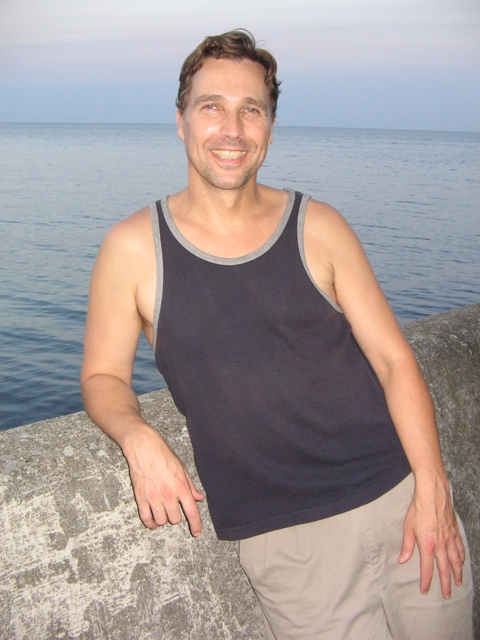
Great to be reviewed by one of our best writers, and especially one whose humour is even darker than mine. Joan Barfoot is one of the few scribes I know who looks into the abyss--and laughs.
http://www.lfpress.com/2016/06/15/book-review-classic-mystery-given-punk-rock-edge
Showing posts with label author Jeffrey Round. Show all posts
Showing posts with label author Jeffrey Round. Show all posts
DAME AGATHA'S "PUTATIVE HEIR"

AFTER THE HORSES
The festival was a huge success. Even I was impressed with the offerings from so many brilliant writers and creators. Now it's time to move on to other things. This fall has brought a plethora of rewards, including After the Horses, fourth in the Dan Sharp mystery series. When I interviewed Shyam Selvadurai at the Naked Heart festival last month, he asked how I enjoyed writing mysteries, both of us having come from purely literary backgrounds. "I love it," I answered truthfully. "Because I can say things I can't say in other types of writing." I mean that in all sincerity. I can write in a way that enables me to be free of the weight and oppressiveness of academia and considerations such as canon and concern for the literary landscape. It's my way of keeping it real.

JONI MITCHELL AT 70
For Joni Mitchell fans, there is a rare treat in the December 2013 issue of Uncut Magazine. Known for revealing herself mostly through song, she seldom does so in print. In a remarkably unguarded and candid interview with Q's Jian Ghomeshi, Mitchell spouts some highly quotable comments on her pop superstar status ("We need goddesses--but I don't want to be one."), on celebrity ("...fame is a series of misunderstandings surrounding a name."), on her ego ("I'd rather have a real arrogance than a false humility."), and the creativity of van Gogh ("It's a lie so you see the truth.") The piece is refreshingly brash and fun and outspoken, even when she sounds cranky and curmudgeonly--which is often, but it's also when she is at her most entertaining and revealing. Enjoy this intimate moment with one of the greats.
AUTHORS' VILLAGE PALM SPRINGS
I'm having far too much fun for a writer's festival, but
then this is no ordinary writer's festival. This is the Authors' Village at Palm
Springs Pride, where I spent the afternoon yakking with Violet Quill co-founder
Felice Picano (Twelve O'Clock Tales), celebrity photographer (and life
partner of director John Schlesinger) Michael Childers (Icons and Legends)
and Mark Abramson (California Dreamers.)
Later, with Michael, I attended the book signing at Just
Fabulous for Scotty Bowers, whose Hollywood tell-all, Full Service,
literally tells all when it comes to Hollywood stars and their sexual
proclivities. Can't wait to read it!
Following that, a celebrity fundraiser for HRC (Human Rights
Campaign) working for LGBT rights in America had me walking the lawn of a Palm
Springs mansion along with stars Zuzanna Szadkowski (Gossip Girl) and
Andrew Rannells (The New Normal), as well as looking around to find
Lorna Luft (aka Liza Minnelli's sister-sorry, Lorna!), who was said to be
somewhere in the vicinity.
Spooks--Death of a Series (13 May 2002--23 October 2011)
Every once in a while, a TV series grabs me by the throat.
Mostly, I give in rather than resist. But I expect a lot in return. Fans of the
show know that the BBC's Spooks can boast of some of the finest writing,
acting, and directing on TV. For ten seasons, the story followed the
professional and private lives of a group of MI5 operatives, with one man,
Harry Pearce, the head of counter-terrorism, at its core. The show enjoyed a healthy
following at home and abroad.
For seven years, the series got better with each season.
Season eight remained strong, even while veering slightly off course to
concentrate on CIA involvement in the UK. (The show was re-branded as MI-5
for American audiences, who seem to prefer things a bit more literal and a lot
more obvious. I give you the disastrous Little Britain USA and the
American Queer As Folk, if you need further proof.)
I was glad when series eight ended, though, hoping one
lesser year would not turn into two, and praying the American flirtation would
soon be over. In fact, far worse lay just ahead. One of the series' trademarks
is the sudden and unexpected endings that befall some of its more popular
characters. This, we are to believe, is what actually happens to spies. While
it was maddening to see them go, the leavings were usually spectacular in
dramatic terms.
The challenge, of course, was to fill those roles in a way
that the previous agents would not be missed too much. For eight years, they
hit the bulls-eye every time. Tom became Adam became Lucas; Zoe became Fiona
became Ros. And you held your breath, because it just got better. With Peter
Firth as Harry Pearce, the one holdout year after year, the series had casting
magic.
Then disaster struck. Someone at Kudos, the show's
producers, must have decided the show needed sprucing up. They hired a writing
duo whose process is best described as schizophrenic. Asked to describe the
process, the writers revealed their preference for a tag-team approach. Each
takes turns writing five pages before passing the script along to the other.
Even more revealing, at least to me, was their idolization of Joss Whedon, the
new king of Hollywood blockbusters. From subtle and layered, the show suddenly became
little more than an action cartoon.
The new writers seemed to think it great fun to take
liberties with the characters in ways that appalled and dismayed anyone who had
enjoyed the careful building of each agent's psychological profile and
background. The adage seemed to be, when in need of tension turn one of your
best characters into a villain. Preferably one who has not been set up in any
way to show such traits previously. The inept desecration and dispatching of
Lucas North's character as a terrorist infiltrator in season nine was not the
first nail in the show's coffin, but it would prove its most unpopular with
many.
In the show's final two seasons, cheap tricks and shock
tactics abound: improbable plot turnarounds, an over-reliance on technology,
and action spat out at machine-gun speed. Tellingly, characters are relegated
to stating the obvious to one another to keep the story rolling: "Hey,
Tariq, better answer that phone. It might be the bad guy calling." Because
we might not be able to figure it out, otherwise, right?
Where previously plot resolutions came from character,
suddenly they were the result of "new" technology that sounds sketchy at best
and unbelievable at worst. Realistic threats are ditched in favour of dime
store hobgoblins, like fake bio-toxins and imaginary ethno-genetic bombs. Even
the erstwhile Peter Firth, as director Harry Pearce, the only actor to make it
through all ten seasons, looks unconvinced by much of what he has to say.
Never before has such a great series gone so thoroughly and
regrettably down in flames. It would be akin to putting the sequel to A
Streetcar Named Desire in the hands of Sacha Baron Cohen. Who would do such
a thing?
Kudos and BBC, you have a lot to answer for.
-----
Jeffrey Round is a writer of contemporary fiction, equally
at home in different genres. His first two books, A Cage of Bones and The P-town Murders, were
listed on AfterElton's Top 100 Gay Books. His most
recent Dundurn title is Lake
On The Mountain, a literary-thriller and first in the Dan Sharp
Mystery series. He is author of the Bradford Fairfax comic mystery series, whose
style he describes as "a cross between Oscar Wilde and Agatha Christie." He is
also a film/stage director, television producer, and songwriter. Jeffrey’s
Blog, A Writer's Half-Life, has been syndicated online. Visit his
website: www.jeffreyround.com.
High Tea and Anti-Launch
Thanks to all who attended my High Tea Garden Party and
Anti-Launch for Lake On The Mountain this weekend. I'm grateful for your
support and for making it such a fun afternoon. Loved all those gloves and
hats, ladies and gentlemen! Special thanks to Brenda Rantala-Sykes for coming all the way from
Sudbury just to cut the crusts off sandwiches ;) and of course to Master of
Ceremonies David Tronetti for his inimitable contribution. You rock!
COOL CANUCK CHICKS
It was my week to hang out with some very
Cool Canuck Chicks. First up was Luba Goy, one of our national icons, whose Luba
Simply Luba was on at the Berkeley Theatre. Her one-woman show gave us an
afternoon of laughs and joy, Luba-style, as La Goy traced her roots from a
German work camp, where she was born and where her parents had been
incarcerated, all the way across the waves to Canada. Touching and true. And it
didn't hurt to tipple a glass or five with Luba and friends afterwards at the Distillery
District.
Next I had the great pleasure to hang out
with Farzana Doctor, author of Six Meters
of Pavement, currently
short-listed for a Lambda Award. We got together mid-week at the 40th
anniversary party of Dundurn Books in the Arts and Letters Club. The Farz and I
yucked it up in front of the camera and, amid all the frippery, managed to
carry on some pretty feisty conversations about the Recently Single status
we've both acquired. If we both go on to gain a Bit Notorious status as well,
it won't bother us one bit.
Finally,
my week was complete with a long-awaited visit from Canada's reigning Queen of
Crime, Gail Bowen, on tour with hubby and long-time companion (44 years!), Ted,
while promoting Kaleidoscope, Gail's thirteenth Joanne
Kilbourn mystery from M&S. Always the gallant host, Ted stirred and shook a
bucketful of martinis, while Gail and I yacked on (and on) about the current
state of Canadian publishing, and then some. Not only is she one of the great
mystery authors, she's also a terrific gal to know and hang out with!
PUMPKIN EATER
This month I signed a contract with Dundurn
to publish Pumpkin Eater, the sequel to Lake On The Mountain, my
first Dan Sharp mystery. I love working with the folks at Dundurn. They're a
great group of dedicated professionals.
I'm also currently a quarter of the way
through a third book, The Jade Butterfly, which opens in Tiananmen
Square the night of the massacre. Jump forward 20 years, when Dan is challenged
to find a woman who disappeared in the fighting, landing him squarely on his
own gritty Toronto turf. If you think you know Toronto, follow Dan around for a
bit. You don't know Toronto! Even I'm a little shocked by some of the places he
ends up.
Although I've been longing to get back to
more traditional literary writing, I really enjoy writing in this breezy, jaded
voice. Judging from the readers' notes I'm getting, I can tell others like it
too. I think of these books as my "dark" mysteries, as opposed to the lighter
Bradford Fairfax mysteries where mostly all's well that ends well. There's more
to come in that series too, as I've got two more books just waiting to reach
the starting gate.
When that happens, you'll be the first to
hear about it. After me, of course.
BOOKENDS
Here is my Bookends interview with Justine
Lewkowic, taped last month at Sleuth of Baker Street, Toronto's crime specialty
bookstore. I felt right at home among the thousands of mystery titles and
Sherlock Holmes memorabilia.
Justine was fun, insightful and probing in
her questions, and the occasional curve ball she threw at me, as we discussed
my newest book, a literary thriller entitled Lake On The Mountain
(Dundurn Press), which takes place jointly in Toronto and Ontario's Prince
Edward County.
While it's not hard for me to talk about
the writing process, I don't often get asked about my personal life in relation
to where the work comes from. Like many writers, I tend to disappear behind my
writing and my characters, so readers often assume they are one and the same.
Not so. In this case, I welcomed the opportunity to be candid on topics that
other interviewers might shy away from.
Among other things, Justine and I discussed
sources of inspiration, anger management therapy, honesty, sex and sexuality,
and growing up gay in Sudbury (my hometown.)
Cable Me Fabulous
It was my week to be a star on cable TV, thanks to the exposure generated by my book, Lake On The Mountain. There it was, the first day of spring, and I found myself a guest on daytime Toronto, Rogers' morning talk show. Host Val Cole was gracious and very comfortable to chat with, which was fortunate as this was a live seven-minute segment with no rehearsal! I managed to be both conscious and alert the entire time as we chatted up the book, so good for me.
Later that week, my house was taken over by funny gal Liz Stembridge and crew (of one, but what the heck!) from the show foQus with Deb Pearce. (Those Rogers folks have got to get it together with their upper and lower case issues.) Liz was a one-woman riot in a very small space (my living room.) While discussing the book and the recent interest from SONY Pictures, we also managed to come up with a small but telling cameo for Liz, should I by any chance get to write, direct and cast the film. (Hey, you never know! If you're curious, it involves Liz wearing an old housedress and swinging a couple of cats by the tail. Animal rights people, back down. They'll be rubber cats!)
And finally (or maybe not), I got to spout my stuff at Sleuth of Baker Street, Toronto's renowned mystery specialty bookstore, newly located at 907 Millwood Ave. There, amid the works of every great mystery author, not to mention several of Sherlock Holmes's deerstalker caps, I got to chat with Justine Lewkowicz, the intrepid host of Bookends. Fortunately, this is an edited show, as I blew my very first question: How do you know when to reveal the clues in a mystery? For me, it's a purely intuitive process, so I didn't have an answer. Turns out that was my answer. Things loosened up and got a bit easier after that. I'm a writer, after all, so I like to think about what I'm saying before I say it, but once I start I can just keep rolling along.
Jeffrey Round is a Toronto novelist and filmmaker. His most recent book is the mystery-thriller Lake On The Mountain, from Dundurn Books. Visit: www.jeffreyround.com.
Like Mother like … Son?
My mother just published her first piece of professional writing at the age of 82. The article, entitled "The Fun in Fungi," was given a two-page spread in the March 2012 issue of More of Our Canada magazine.
My mother started collecting ceramic mushrooms more than a quarter century ago. The pieces, life-size, lifelike reproductions, were made in Lantz, Nova Scotia. Originally designed for museums, word spread of their artistry and uniqueness, and collectors sought them out. My mother is one of those who now take pride and pleasure in their collections. She owns more than one hundred.
As far as publishing goes, I suppose you could say my mother is a late bloomer, but it's probably more accurate to say she has a unique sense of timing. I remind myself that this is the same woman who returned from a trip to New Mexico some years ago to announce she'd just taken a ride across five counties in a hot air balloon. Apparently, it was something she'd wanted to do for years. While I'm happy to have writing in common with my mother, I doubt I will add ballooning to the equation.
When she showed me her article, my mother told me how proud she was of her writing skills. It was a good, straightforward telling of her love of collecting, along with a short history of the ceramic pieces. In fact, I was as much impressed with the writing as the fact that she'd got it published in one of her favourite magazines.
Still, the writer in me wanted to know more. Was there anything she'd do differently? I asked, knowing my own fondness for textual revisions. She thought this over a moment then said, yes, in fact there was something she would have done differently: "I’d send them a different picture of me."
"Why?" I wondered, thinking the photo an accurate portrait of her standing in front of her display case. She hesitated. "Well, I’d send them something a little younger," she said.
Ah, but of course. There was that family resemblance again.
Jeffrey Round is a Toronto novelist and filmmaker. His most recent book, Lake On The Mountain, was published by Dundurn Books in January. Visit: www.jeffreyround.com.
Remembering Artist Steve Walker
Dying at 50 shouldn't seem so terrible. After all, you've had the best of it--your best-looking years, your randiest sex years, your most fun years. Maybe even your most productive years. Yet isn't that the time of life when you expect to sit back and coast on your accomplishments, the decade you did all that hard work for?
I don't know how Steve Walker would have viewed his fifties. He'd achieved success on his own terms: his paintings were commanding respectable sums and he was living off the profits. He must have felt gratified that his work was accepted and appreciated. But Steve wasn't the type to stop and think about glory. I sometimes think all he really wanted was to be left alone to paint.
I first encountered Steve in 1990, when he was Artist in Residence at the People With AIDS foundation, and I was an editor for Xtra! Magazine. I noticed two things about him right off--one, he was very attractive in that blond, Nordic way that normally didn't appeal to me, and two, he didn't acknowledge the presence of others, even when you stared right at him.
Steve's fame grew through the '90s. The gay community was quick to claim him, even if Toronto's arts community was not. His iconographic paintings of young men appealed to the "body beautiful" mentality of gay men at the time, even as AIDS was taking its greatest toll in North America.
His work appeared on books covers and in calendar reproductions, attesting to its popularity. Despite Steve's outward success, I often saw him working in a clothing store on Yonge Street, looking embarrassed and out of place. Artists still had to pay the bills, after all.
I eventually came to count Steve as a friend and enjoyed talking to him when we ran into one another, however infrequently. We had things in common: both loners, obsessively devoted to our artistic disciplines, and both somewhat inclined to suffer fools badly. Read: anti-social. Yet that was only on the surface.
Steve wasn't the sort of person to approach you, though he was receptive if you approached him. If you had something engaging to say, he would reciprocate. I once introduced him to a friend, another painter, thinking they'd have things in common. My friend tended to the florid when discussing art. Steve was more businesslike, not given to artsy statements. He was a "mood" man. He didn't want to hear about "beauty" and "grace" and "style". Fireworks resulted.
I admired Steve's art and artistic process. He created a gay cannon with a form of super-realism. His images were indelible and easily identifiable as a "Walker." Other artists were envious of his success and quick to criticize his limitations. He seemed to paint the same piece over and over, in endless variations: young men, touching or not touching, in casual clothes, with beautiful skin tones in cool environments.
Mood was everything in a Walker painting. Well, until you stopped and noticed just how accomplished his craft was, how striking the composition and the Rembrandt lighting. "How is that original?" other artists demanded. Steve hated such questions, hated the assumption behind them that his art was somehow "less" because he painted in a tradition that included artists like Alex Coleville and Andrew Wyeth.
That was another thing we had in common: feeling isolated from what was in vogue in Toronto's arts scene. Steve seldom saw himself in a painting, while I seldom saw myself on page or stage. We both set out to change that, each in our own way. Finding greater acceptance elsewhere was partly what led Steve to Costa Rica, a bit of Latin paradise we both loved. Steve made that love a reality. I, on the other hand, continued to endure the snow at home, complaining about the weather while making frequent trips south.
The last time I saw Steve, I'd asked if he had anything appropriate for the cover of my upcoming book. I went to his studio and we mulled through his work, but nothing felt right. It's possible he was holding out on me, hiding something that would have been perfect. He was wary of publishers. His work had graced the covers of a number of well-known books and he was dissatisfied with the reproduction quality.
He showed me one of the recent publications. To my eyes it was beautiful. He shook his head impatiently. "Look at the colours!" he insisted. "They’ve leached all the warmth out of it." Then he showed me the original and I saw what he saw: a minute variation in flesh-tones, but enough to make a difference overall.
Our conversation drifted. Steve seemed relieved that I wasn’t going to press the issue of finding a cover painting. We drank and talked. I told him about a comedic passage I'd just written about opera. To my surprise, he began to recite the lyrics from Vissi d’arte, Floria Tosca's impassioned aria about living for art, living for love. I surprised him by reciting the same lyrics in Italian. (I had a greater advantage, having translated them for my book, Death In Key West.)
In all the years I'd known Steve, I had no idea he was an opera queen. "But I dislike jazz," he confided. That was Steve, always defining, always grading things. But it made sense. Jazz is freeform whereas classical music is highly structured, not unlike Steve's paintings. Yet the admission seemed to contradict his physical good looks, his quick laugh when you said something genuinely funny. Steve looked more like the guy who should be at the centre of the party or in the middle of the dance floor, soaking up the latest dance tune. In fact, Steve had no use for such things. It just wasn't him.
I left that day full of plans to visit him in Costa Rica. It never happened. I got busy; he got hard to get hold of. I last heard about him several months ago at a party. A friend of the host, another gay artist, had been raging over the fact that a Steve Walker painting had just sold for $30,000. All I could think was, "Good for Steve!" Curious, I asked the name of the artist who had been so angered. I'd never heard of him. I later looked up his work on-line and was amused to find second-rate reproductions in an Attila Lukacs style. Hardly original.
"You know why people prefer my work to photographs?" Steve once asked me. I nodded. In fact, I did know. Because it took time to create that Steve Walker look. You can erect a building in a month, given the manpower and the tools, but art takes time. And time is one thing that artists never have enough of. Oddly, Steve never complained of feeling that he wouldn't have enough time.
In an interview some years ago, Steve told writer Michael Rowe that the one thing he hoped for, what he felt an artist could aspire to, was to "chronicle the times in which he lives, and leave some sort of indelible record behind when his own time comes." Steve fulfilled his part in the bargain. Now it's up to the pundits. Or just maybe it's up to us, his appreciative friends and fans, to keep Steve Walker's images and his uniqueness alive.
Under the Havana Moon
Every few years, I fall in love with a city. Last time it was New Orleans. It wasn't love at first sight, though. I had to go back a second time to be sure. Despite Katrina's lingering devastation, it was an amazing place. The time before, it was Paris--all that splendour. So it makes sense that a cross between the two would do it for me.
Havana did.
The city's contradictions defy you at every turn: vibrant and laid-back, squalid and beautiful, rundown yet visually awesome, poor but very, very safe. Fascinating, is how I describe it.
It helps to have some Spanish at your command, as well as a reliable companion. I had both. At the airport, I met an Australian surfer. I'll call him Charlie Dingo. Charlie has a nose for adventure. He's what's known in the vernacular as a "chick magnet." Despite our disparate backgrounds, we clicked. It was like having an instant friend, only with no history. Thanks to Charlie, I met some very fun Cubans. Thanks to me, Charlie knew what they were saying. Together, it guaranteed a great time.
I like my hotels clean, spacious and quiet. El Paseo Habana in Vedado offers that and more. It's a 15-minute walk from La Rampa, a lively cultural area, and a leisurely hour from Habana Vieja, the city's main tourist destination. If you're looking for a beach, however, don't stay there. It's considerably farther from Playas del Este.
Unlike me, Charlie is not a hotel guy. He wanted una experiencia verdad--the real thing. So we set out to find him a casa particular, the new capitalist trend for Cuban families with a spare room to rent. Basically, they're government sanctioned B&Bs.
In my experience, Cubans are not naturally friendly and out-going. They're reserved, like Canadians. It's only as we went from casa to casa that we got to meet some locals. An offer of coffee here, an invitation for rum later on--and suddenly you have a social life in Havana. It can be very rewarding.
Walking is the best way to see the city. There's also a good $5 double-decker bus tour, but it's pretty fast and you won't catch much of the English commentary--grammatically correct, but spoken at breakneck speed. Just enjoy the sights then go back later and visit whatever looked interesting.
Mastering the currency might prove difficult. It bewildered me. First, there's the CUP, or moneda nacional. It's the only legitimate currency. No one wants it. The alternative is the convertible peso, or CUC. If someone seems to be asking for "cook", that's what they're talking about. It's also called "divisa", which makes it really confusing. That and the fact that the two currencies are vastly different in value.
Visitors make the mistake of thinking there are two price listings for everything and that locals pay less. Not true. If the price is listed in CUP, anyone can pay in CUP or CUC. If you pay in CUC, however, you're paying more. When the price is in CUC, there's no choice: everyone must pay in CUC. But does it really matter whether you're paying thirty cents or a dollar-twenty for a beer? Charlie might disagree, but then Australians drink a lot of beer.
As racist as it sounds, many Cubans will try to cheat you. It's a national pastime and done without malice. Ask the price first and always count your change. I've even been short-changed in the CADECAs, or Casas de Cambio, while exchanging money. On the other hand, you can always bargain for things. Charlie was better at it than me, so I let him do the "no entiendo" thing and waited to see how far he got before I entered the game to nail the price.
One of the things that may surprise you is how literate Cubans are. On Calle Obispo, Old Havana's famed market street, I came across five bookstores, as well as a gigantic used-book stall. At first I put it down to a lack of cable TV, but after visiting several Cuban homes I realized this wasn't the case. What they don't have is Internet. WiFi is all but non-existent, so everyone reads. If you're desperate, some hotels offer on-line access for up to $10 CUC per hour. It's slow, so don't expect to spend all your time checking Facebook.
Nightlife can vary. During the week, clubs tend to close around midnight, though you can always find something happening on the street, legal or otherwise. (Charlie was always good for that.) The police tend to harass the locals rather than the tourists when anything untoward happens, but keep your wits about you.
There are plenty of nightclubs. Some are fancier than others. Nearly everyone gets dressed up, however, and Cubans really know how to dance. As for music, you'd be just as entertained by stopping to listen to a free concert (you'll hear them, especially on weekends) as you would by paying to go to a jazz club. The free concerts are very impressive. In another country, some of these people would be top dollar talent.
There is almost no visible LGBT culture, and Cubans are both sexist and macho in their manner and speech. On the other hand, once you get to know them, they will happily trot out their cell phones and show you pictures of their friends and ask you to guess which of the beautiful girls are real and which not. Again, it can be confusing.
There's one big LGBT party every weekend, but it moves around to avoid being busted. Both film director Pedro Almadovar and designer Jean Paul Gaultier have been netted in raids at gay gatherings. (Presumably, they survived.) You might meet someone on the Playas del Este to tell you where to find these events, or sometimes at Cine Yara on La Rampa. I'm not a beach person so I didn't venture that far. Besides, I didn't go to Havana to spend all my time doing what I do at home.
In fact, my primary reason for going was to check out the possibility of setting one of my Bradford Fairfax comic mysteries there. Luck, and Charlie Dingo, were with me. I had some of the best adventures I've had in a long time, and most of it quickly spun itself into a plot long before I boarded my plane home. So if you're a fan, keep your eyes open for Fairfax International: Havana Club in the future. Once I get around to writing it, of course.
Hasta la vista, baby!
Dame Agatha and the Body in the Library
Mystery writer PD James found her output "astonishing". Queer as Folk creator Russell T Davies thought her remarkable enough to include her as a character in his revival of the beloved Doctor Who series. And, oh yes--she’s also the best selling author of all time. No small feat for a woman with no formal education. I'm talking about the demure Dame Agatha Christie, writer of more than eighty books and plays, not all of them mysteries.
I tend to go on Christie binges, reading three or four titles in a row then putting her aside for a while. Truth is, I don’t want to run out. I turn to her when I want good fun, a bit of entertainment and common sense. She’s a delight when she’s good, a wonder when she’s great, and at the very least amusing--or tedious, depending on your outlook--when she is neither.
She was frequently brilliant, yet not above publishing dreck. (And happy to admit it, if only in her private diaries.) She was not a literary stylist and her characters can at times be downright annoying. Her true brilliance lies in baffling her reader's attempts to solve her crimes, with endless variations in so doing. It's sometimes possible to figure out the "who" of her whodunits, but it's close to impossible to figure out the how and why, even when the clues are laid out before our eyes.
You can't read just one Christie title and categorize her. If I were to create a Christie primer, these half dozen titles would be indispensable: The Mysterious Affair at Styles (both Christie's and Hercule Poirot's first appearance), The Murder of Roger Ackroyd (a classic, possibly her most audaciously brilliant work), And Then There Were None (also brilliant, though less likeable because none of the characters is sympathetic), Crooked House (one of Christie's favourites among her titles), Three-Act Tragedy (see my note below), and Curtain (Poirot's last, and perhaps most surprising case.)
Fans of the soft-spoken Jane Marple will note I haven't mentioned any of her books here. That's partly because I've read more of those belonging to Poirot, but also because I am less astounded by her cases, however much I enjoy her sly character.
Here's a roundup of titles I've read recently, with a possible rating from one to four stars.
Cat Among the Pigeons (1959) (**)
This is one of those hybrid Christie novels--half-mystery and half-thriller--which don't completely satisfy either genre. It's from what I call her late-middle period--post-war, but pre-sixties--where she seemed for a while to have become bored with writing. Some of her books from that period take on a rote quality, though the genius isn't completely missing. In a diary entry in the 1930s, she claims to have got tired of Poirot, calling him an "ego-centric creep", and uses him less well. In this case, he pops into the story's latter third to solve the crime without doing much other than uttering an occasional comment on morality. The plot involves a trio of murders at an all-girls school in England. This is preceded by a revolution in an imaginary country called Ramat, and involving a secondary plot about missing jewels. The story is further marred by unnecessarily having too many characters to keep track of, though the solution, as usual, is delicious.
The Body In The Library (1942) (**)
A somewhat more cohesive effort, this story features Miss Jane Marple, that quietly observant spinster whose understanding of human nature serves her well in her frequent forays into accidental sleuthing. Christie intended this as a parody of mystery genre cliches, thus the book's title. When a dancing girl turns up strangled in the library of an English gentleman, he claims to know nothing about her. His wife, a friend of Miss Marple's, cannily invites Jane to do some sleuthing on her own. A second body turns up not long afterwards. Apart from Marple, none of the characters is really compelling, and the book feels quickly tossed off, as though Christie couldn't wait to be finished with it. The story is further marred by having not one but four professional sleuths investigating the murders, though we know Marple will solve it. Sorting out the police inspectors gets tiresome, and the solution to the murders feels a bit arbitrary.
Murder at the Vicarage (1930) (***)
An early Christie, and the first to employ Miss Jane Marple, that diligent do-gooder with the pessimistic outlook on her fellow human beings. This is clearly a book Christie put a good deal of thought into, as all the loose ends tie up ever so neatly in a rather impressive way. A much-loathed magistrate is murdered in the vicarage at St Mary Mead. Suddenly everyone in the vicinity comes under suspicion for one reason or other. It takes Marple's all-seeing eye and quick wit to put the pieces in place, which she eventually does to good end. Plenty of fun characters and outrageous quips.
Three Act Tragedy (1934) (****)
An early Christie mystery featuring Inspector Poirot, which The New York Times called "Uncommonly good." I agree. By now, Christie has got very adept at her variations on a "locked room" murder. This is one of her best. The writing is smooth and the mystery is tight, though she drops her clues liberally throughout. It has the added attraction of a colourful, headstrong female character nicknamed "Egg." Poirot is already on the scene when a mild-mannered clergyman is poisoned at a cocktail party. At first, he can discern no motive and thus has no lead to follow. When at last he grasps it, he's shocked by its audacity. You will be too.
Jeffrey Round is a Toronto novelist and filmmaker. His most recent book is the mystery-thriller Lake On The Mountain, from Dundurn Books. Visit: www.jeffreyround.com.
Subscribe to:
Posts (Atom)